
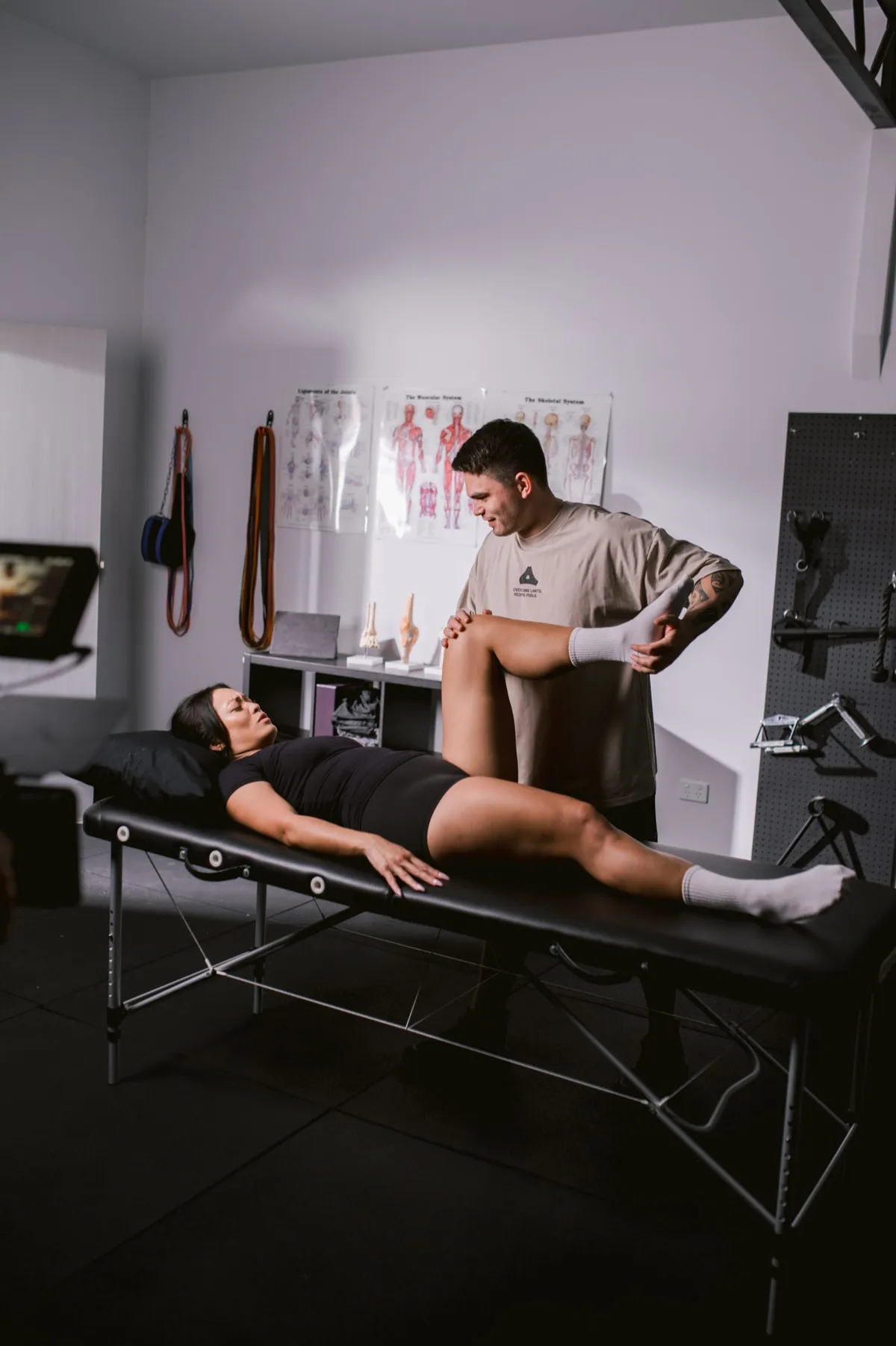
The Real Reason Your Knee Pain Keeps Coming Back (And Why Rest Isn’t Fixing It)
It is the most frustrating cycle in running, and almost every runner has been there.
You feel a twinge in your knee. You do the “responsible” thing: you stop running. You take two weeks off, maybe you foam roll, maybe you ice it. The pain vanishes. You feel great. You walk out the door for your first run back, optimistic and fresh.
Then, two kilometers in… it’s back. The exact same pain, in the exact same spot.
As runners, our first instinct is to blame the knee. We tell ourselves stories like, “I just have bad knees,” or “Running is destroying my joints.” But at Lift-Run-Rehab, when we look at the clinical data and the biomechanics, the reality is usually quite different.
If you are stuck in the loop of rest-and-recurrence, here is the truth about why your pain is returning—and why sitting on the couch didn’t fix it.
The “Middle Child” Syndrome: Why Your Knee is the Victim
We often treat the knee as if it is the criminal, but biomechanically, it is almost always the victim.
Think of your leg as a chain. The knee is a simple hinge joint caught between two complex, mobile powerhouses: the hip and the ankle. Because it is stuck in the middle, it is at the mercy of what is happening above and below it.
When we analyze runners with “Runner’s Knee” (Patellofemoral Pain Syndrome) or IT Band friction in the clinic, we rarely find a structural problem with the knee itself. Instead, we find:
Weak Hips (The Glute Deficit): If your glutes—specifically the glute medius—aren’t strong enough to stabilize your pelvis when you land, your thigh bone rotates internally. This twists the knee joint and causes the kneecap to track poorly.
Stiff Ankles: Running is a high-impact sport. If your ankle doesn’t have the mobility to absorb the shock of landing, that force has to go somewhere. It travels up the chain and hammers the knee.
When you rest for two weeks, you let the inflammation settle, which is why the pain goes away. But you didn’t fix the weak hip or the stiff ankle. You didn’t address the root cause. So, the moment you start running again, the same faulty mechanics apply the same pressure, and the pain returns.
The MRI Trap: Hurt vs. Harm
We live in an age of data, which can be a double-edged sword. If you’ve had chronic knee pain, you might have gone for an MRI. You might have seen words like “wear and tear,” “cartilage thinning,” or “meniscal degeneration.”
It is easy to look at that report and think, “That’s it. My parts are worn out. I’m broken.”
Here is the comfort we want to offer you: Structure does not dictate destiny.
Medical studies consistently show that a huge percentage of pain-free runners have “damage” on their MRIs. They have wear and tear, yet they run marathons without issues. Why? Because their bodies have the capacity to handle it.
Realistically, knee pain is rarely about being “broken.” It is a math problem of Load vs. Capacity.
The Load: The distance you run and the force of gravity.
The Capacity: How strong your muscles and tendons are to absorb that load.
The Pain: What happens when the Load exceeds your Capacity.
When you rest completely, you reduce the Load (good), but you also lower your Capacity because your muscles get weaker (bad). It’s a losing battle.
The Runner vs. The Coach: Bridging the Perspective Gap
There is often a war inside every injured athlete’s head.
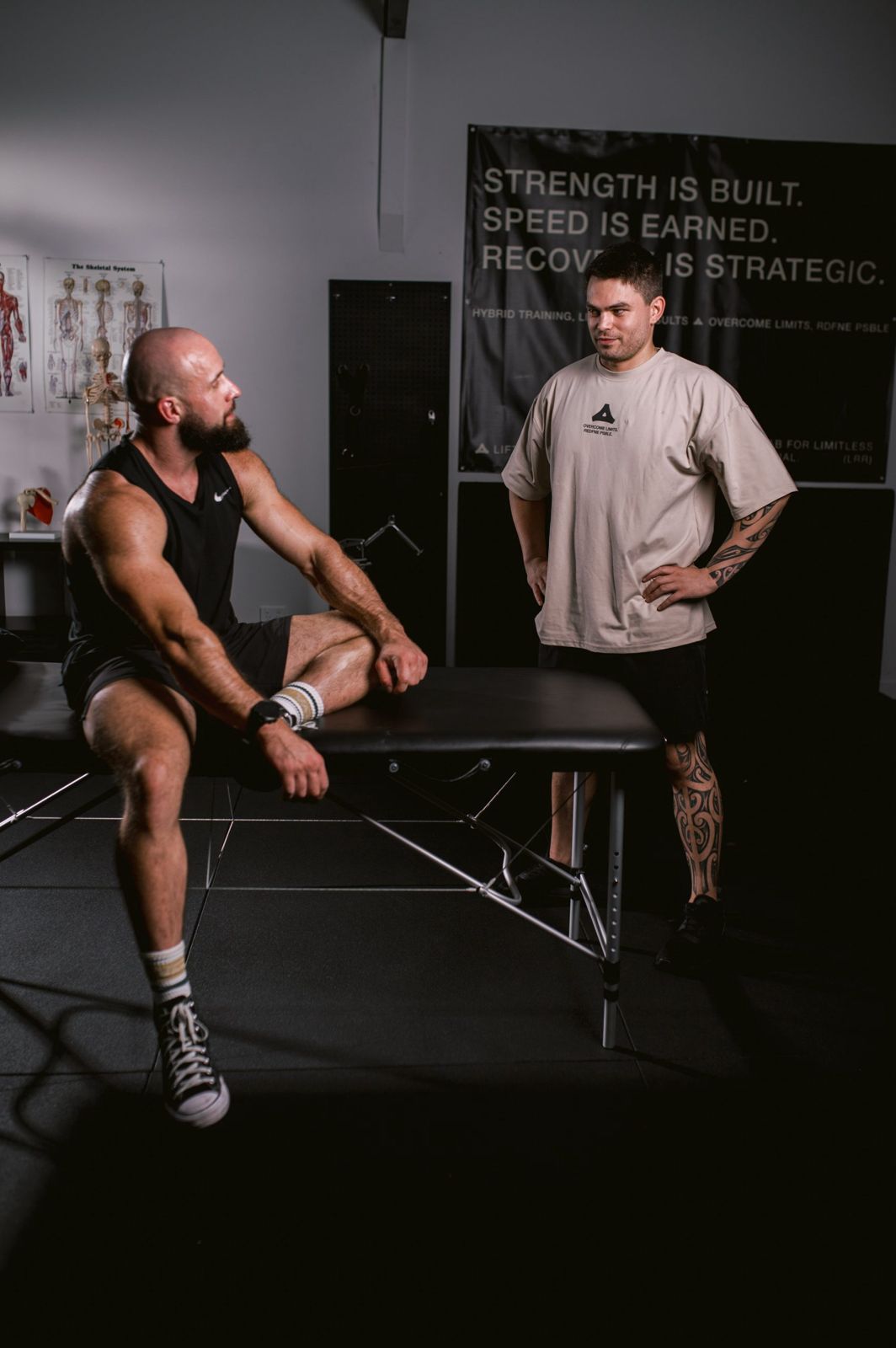
The Runner is emotional. The Runner uses running for stress relief and identity. The Runner wants a quick fix—new shoes, a knee brace, or a magical stretch—so they can get back to their dopamine hit immediately.
The Coach (and the Clinician) is logical. The Coach sees that your cadence is too slow (increasing impact), your stride is too long (braking forces), and your posterior chain is underdeveloped.
To fix the knee, the Runner has to listen to the Coach. We have to stop looking for a “cure” in a bottle of ibuprofen and start looking for a solution in the squat rack.
How to Break the Cycle
You don’t need to stop running forever. You need to stop running poorly and start loading smartly.
1. Increase Your Capacity (Get Strong) This is the non-negotiable pillar of hybrid training. To run far, you must be strong. Heavy, slow resistance training (Squats, Split Squats, Deadlifts) turns your muscles into shock absorbers. The stronger your glutes and quads are, the less force goes through your knee joint.
2. Optimize Your Mechanics Sometimes, small tweaks make massive differences. Increasing your cadence (steps per minute) by just 5-10% can significantly reduce the load on your knee with every single step.
3. Active Recovery > Total Rest Instead of sitting on the couch, find your “pain-free baseline.” Maybe you can’t run 10k, but can you run 2k? Can you cycle? Can you row? Keep the engine running and the tissues moving. Motion is lotion.
The Bottom Line
Your knees aren’t past their expiration date. They are just overworked and under-supported.
If you are tired of the cycle of pain, stop treating the symptoms and start treating the system. It takes patience to build strength and retrain your gait, but the reward is a body that doesn’t just survive the run—it attacks it.
Struggling with recurring knee pain? At Lift-Run-Rehab, we specialize in diagnosing the mechanical root cause of running injuries. Book a Gait Analysisor a Physiotherapy Consult at our Sans Souci studio today.
Lift Heavy. Run Far. Rehab Smart.The LRR Team